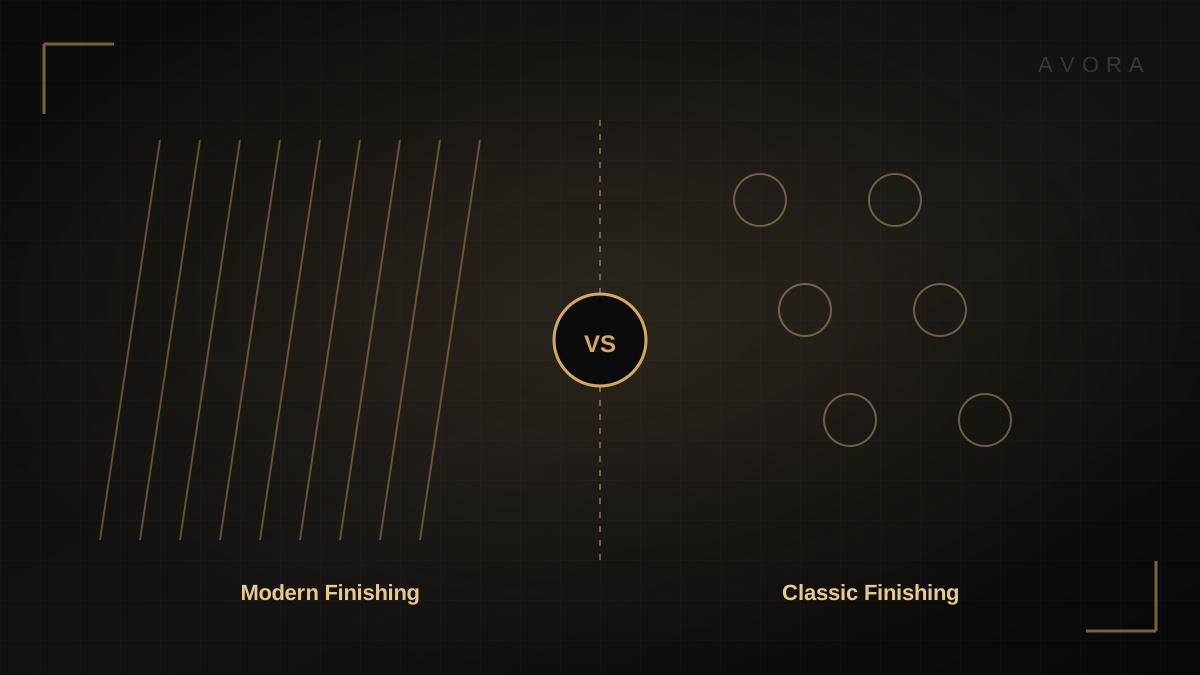
Modern or Classic Finishing?
The modern-versus-classic finishing decision isn't just personal taste; it has real implications for cost, day-to-day maintenance, and future resale or rental value.
Comparing the two styles
| Criterion | Modern Finishing | Classic Finishing |
|---|---|---|
| Overall cost | Medium to high depending on materials | Usually higher due to decorative detail |
| Ease of maintenance | Easier, simple lines and practical materials | Harder, gypsum and ornamental details need care |
| Execution time | Relatively shorter | Longer due to detailed work |
| Perceived value | Contemporary and elegant | Grand and traditional |
Why many lean toward modern finishing
Simple lines and neutral colors make daily upkeep easier and execution faster — suiting owners who want a practical, elegant result without added complexity.
Why classic remains a preferred choice for some clients
Decorative details (gypsum work, columns, classic lighting) give a sense of grandeur that's hard to achieve with a minimal design — preferred by those wanting a traditional, stately look.
A middle ground: modern with classic touches
Many of our clients choose a modern design base (simple lines, neutral colors) with a few limited classic touches (lighting or a statement furniture piece) instead of committing fully to one style.
Note: prices in this article are indicative and vary with specification, quantity and site conditions. For an exact figure for your project, request a free quote.
Frequently asked questions
Which holds higher resale value?+
It varies by local market taste at the time of sale; neutral modern finishing usually appeals to a wider pool of buyers.
Is classic finishing always more expensive?+
Usually yes, due to detailed decorative work, but the difference depends on how much detail is actually required.
Can the style be changed later without full demolition?+
Some changes are possible (colors, lighting, furniture), but changing structural details like gypsum work requires renovation.