Steel or Aluminum for Shades? Which Is Better
When ordering a car or garden shade, many clients face the material question: steel or aluminum? Both have real advantages, and the best choice depends on shade size, budget, and how much maintenance you're willing to do.
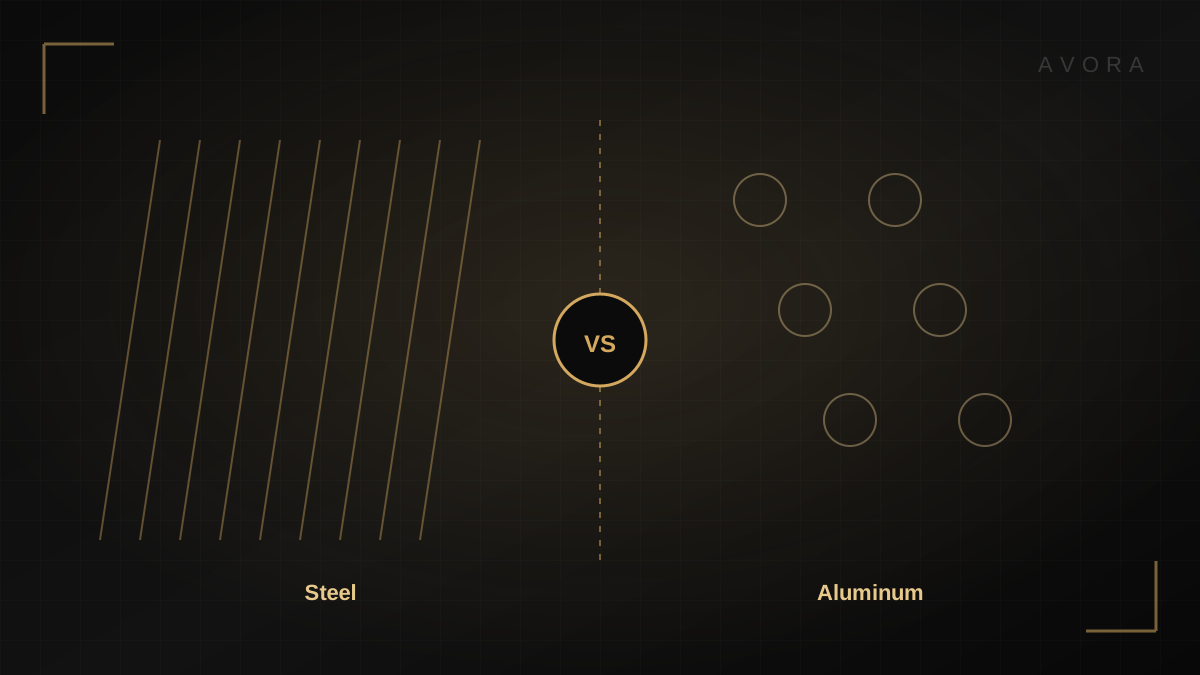
Direct comparison between the two materials
| Criterion | Steel | Aluminum |
|---|---|---|
| Structural strength | Higher, suits large spans | Good for medium spans |
| Weight | Heavier | Much lighter |
| Rust resistance | Needs treatment (galvanizing or paint) | Naturally rust-free |
| Initial cost | Usually lower | Usually higher |
| Routine maintenance | More (periodic repainting) | Less |
| Appearance | Classic, accepts varied shapes | Modern and clean |
When to choose steel
- When you need large spans with few posts (multi-car parking, industrial shades).
- When initial budget is a priority.
- If you're comfortable with simple routine maintenance (periodic paint checks).
When aluminum is the better choice
- In high-humidity coastal areas where rust is a real threat.
- When you want the least possible long-term maintenance.
- For small to medium residential shades with a modern look.
Our practical recommendation
For large projects (commercial parking, industrial shades), well-treated steel remains the more economical choice. For residential projects in coastal areas, aluminum offers more long-term peace of mind despite the higher upfront cost.
Note: prices in this article are indicative and vary with specification, quantity and site conditions. For an exact figure for your project, request a free quote.
Frequently asked questions
Does galvanized steel rust in coastal areas?+
Galvanizing greatly reduces rust risk but doesn't eliminate it entirely under sustained high humidity; routine maintenance matters.
Can aluminum handle large shades?+
It handles medium areas well, but for very large spans steel remains the stronger structural choice.
Which suits a single car shade at a residential villa?+
Both work; the decision here usually comes down to budget and preferred maintenance level rather than structural need.