Sandwich Panels in Jeddah: Types, Uses and How to Choose
Sandwich panels have changed how Jeddah builds. What once took months in block and concrete now takes weeks, with better insulation and far less weight. But success starts with choosing the right panel — the wrong one means higher power bills or early failure. This guide covers what you need before buying.
What is a sandwich panel?
It is a structural board of three layers: an outer metal sheet, an insulating core, and an inner metal sheet, bonded under pressure in the factory to act as one unit.
The result is a light board with good structural strength and high thermal insulation — ideal for Jeddah's heat, where cooling dominates the electricity bill.
Panel types by insulation core
| Core | Advantages | Best for |
|---|---|---|
| Polyurethane PU | Highest insulation efficiency, light | Cold rooms, conditioned buildings |
| Polyiso PIR | High efficiency + better fire resistance | Warehouses, industrial facilities |
| Rockwool | Excellent fire and acoustic performance | Kitchens, workshops, high-risk sites |
| EPS | Lowest cost | Hoarding, temporary rooms, dry storage |
Thicknesses and when to use them
- 3 – 4 cm: internal partitions, temporary hoarding, unconditioned rooms.
- 5 cm: guard rooms, site offices, dry storage.
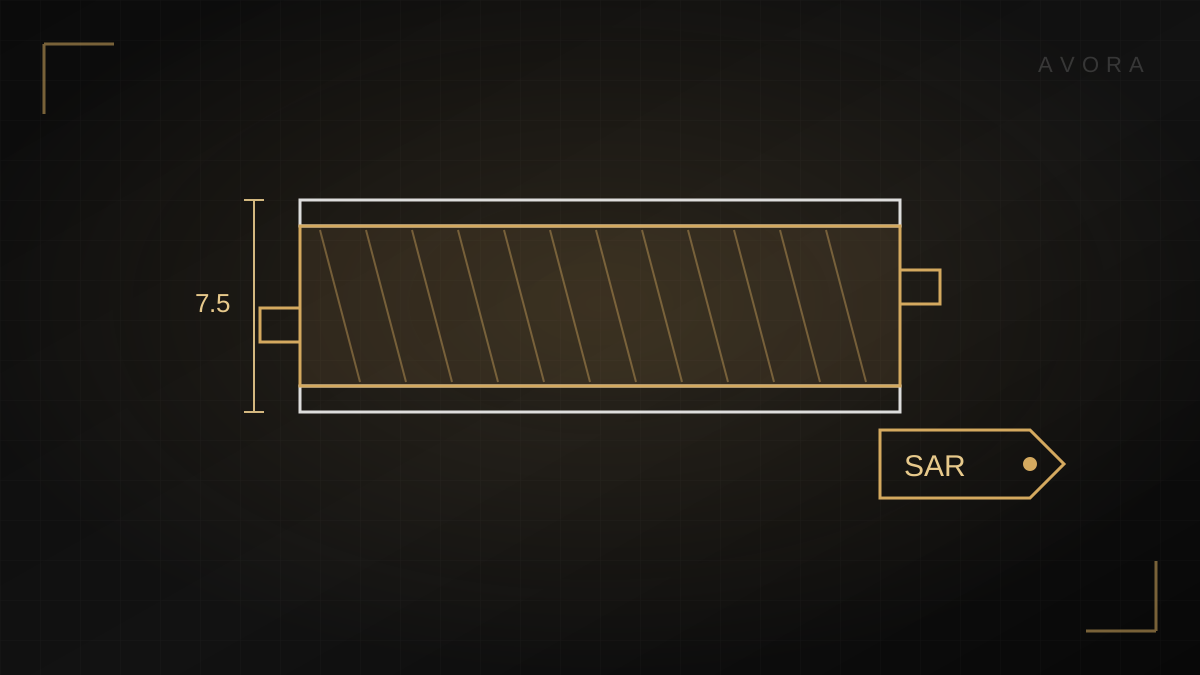
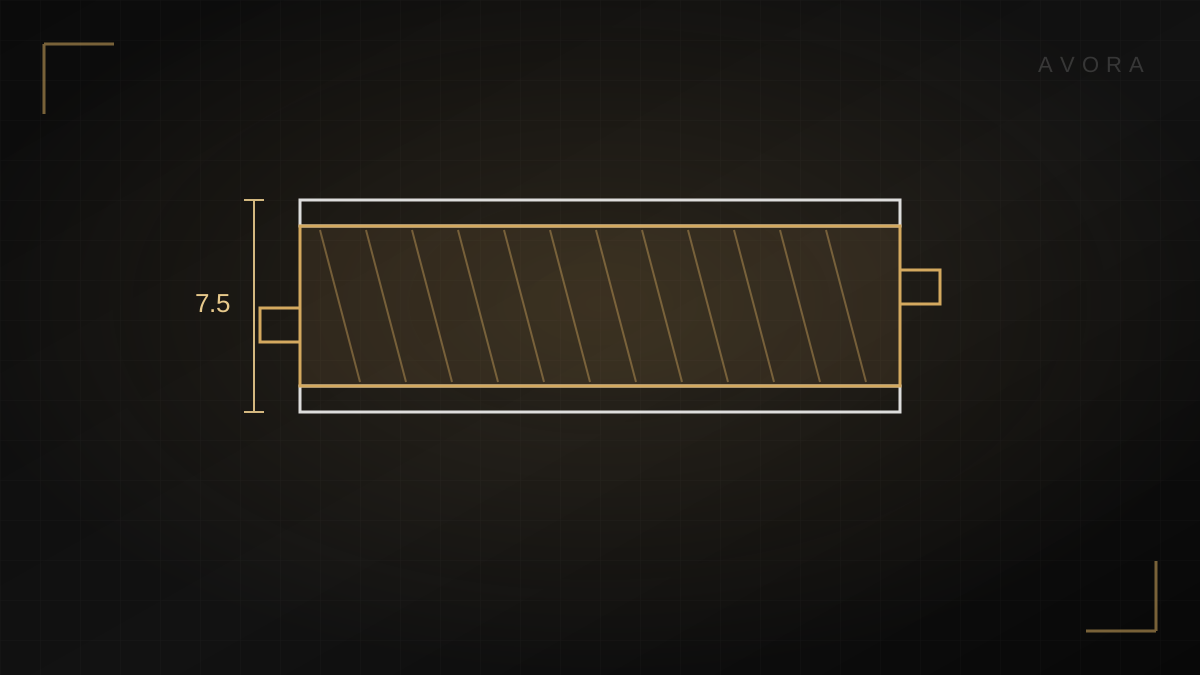
- 7.5 cm: the most common choice — annexes, above-zero cold rooms, conditioned buildings.
- 10 cm and above: freezer rooms, chilled warehouses, maximum insulation needs.
Most requested applications in Jeddah
- Cold and freezer rooms for restaurants, shops and food warehouses.
- Residential annexes on rooftops and in courtyards.
- Warehouses and hangar cladding to cut internal heat.
- Guard rooms, site offices and prefabricated buildings.
- Internal partitions in factories and workshops.
- Temporary hoarding around construction sites.
Choosing the right panel: five questions
- Is the space conditioned or refrigerated? Refrigeration needs greater thickness and tighter joints.
- What is the fire risk level? Kitchens and workshops call for rockwool.
- How long will it be used? Temporary structures do not need top specification.
- How close is the site to the sea? Coastal air demands well-galvanised, well-coated steel.
- Will the structure be relocated? If so, choose a system that dismantles easily.
Quality signs to check before buying
- Core density: higher density means better performance and life — ask for density, not just thickness.
- Steel gauge: no less than 0.30 mm for normal use, 0.40 mm for permanent projects.
- Surface flatness: good panels are flat with no visible waviness.
- Joint quality (tongue and groove): a tight joint means real insulation with no air leakage.
- Product certificate, origin, and a written installation warranty.
Areas we serve
AVORA is headquartered in Jeddah and delivers projects across Makkah, Taif, Madinah, Riyadh, Dammam and all regions of the Kingdom.
For projects outside Jeddah we arrange a site visit before issuing the quote, and transport costs are stated transparently within it.
Note: prices in this article are indicative and vary with specification, quantity and site conditions. For an exact figure for your project, request a free quote.
Frequently asked questions
What is the difference between sandwich panels and plain sheeting?+
Plain sheeting is a single uninsulated layer; a sandwich panel has an insulating core between two metal skins, greatly reducing heat transfer and cooling consumption.
Do panels handle Jeddah's heat?+
Yes — they are among the best solutions for hot climates because they insulate rather than conduct heat. Choose well-galvanised, coated steel for coastal humidity.
Can panels be installed on an existing building?+
Yes, and this is common for rooftop annexes and roof cladding; the key advantage is light weight that does not overload the existing structure.